Why I Stick to Qigong Every Morning — A Simple System That Keeps Me Grounded
For years, I struggled with low energy and constant stress, trying every quick fix out there. Nothing lasted — until I found qigong. It’s not magic, just a consistent, gentle practice that works with your body, not against it. Over time, I noticed deeper breaths, calmer thoughts, and real resilience. This is how a systematic qigong routine became my foundation for daily health maintenance — and how it could do the same for you.
The Hidden Cost of Modern Life: Why We Need Sustainable Wellness
Life today moves fast. Between managing households, caring for family members, meeting work deadlines, and keeping up with endless to-do lists, many women in their 30s to 50s find themselves running on empty. The result? Chronic fatigue, mental fog, irritability, and a constant sense of being overwhelmed. These are not signs of personal failure — they are symptoms of a lifestyle that demands too much without offering time to restore. The modern wellness industry often responds with intense workouts, restrictive diets, or expensive supplements promising rapid results. But these solutions rarely last. They require high effort, often lead to burnout, and fail to address the root issue: imbalance.
Traditional Chinese medicine has long recognized that true health is not about pushing harder but about restoring rhythm and balance. Instead of fighting the body, it seeks to support its natural ability to regulate, repair, and renew. This philosophy is especially relevant for women navigating hormonal shifts, caregiving responsibilities, and the quiet accumulation of daily stress. What’s needed is not another extreme solution, but a sustainable practice — something simple enough to do every day, gentle enough to feel nourishing, and effective enough to make a real difference over time. That’s where qigong comes in.
Unlike high-intensity exercise or complicated wellness regimens, qigong does not demand perfection or peak performance. It asks only for presence, patience, and consistency. By working with the body’s natural energy flow, it helps counteract the effects of chronic stress and supports long-term well-being. It’s not about fixing one symptom; it’s about building a foundation for lasting health. In this way, qigong becomes less of a ‘workout’ and more of a daily reset — a quiet promise to yourself that you are worth the time and care it takes to stay grounded.
What Exactly Is Qigong? Demystifying the Practice
At its core, qigong (pronounced “chee-gong”) is a mind-body practice that combines slow, deliberate movements, coordinated breathing, and focused attention. The word itself comes from two Chinese characters: *qi*, meaning vital energy or life force, and *gong*, meaning cultivation or practice. Together, qigong means “cultivating energy.” But this concept is not mystical or supernatural — it refers to the body’s innate ability to maintain balance, heal itself, and function optimally when supported.
Think of the body like a garden. You can pour fertilizer on it, water it aggressively, or try to force growth overnight — but real health comes from consistent, gentle care. Qigong is the daily tending of that inner garden. It doesn’t create energy from nothing; it helps remove blockages, improves circulation, and enhances awareness so that energy can flow more freely. This is why many people notice improvements in sleep, digestion, and emotional stability after just a few weeks of regular practice.
The practice is rooted in traditional Chinese medicine, which views health as a state of balance between opposing forces — such as activity and rest, effort and ease. When this balance is disrupted, symptoms arise. Qigong helps restore it through three key elements: movement, breath, and intention. The movements are gentle and repetitive, designed to open energy channels and improve joint mobility. The breath is slow and deep, activating the parasympathetic nervous system — the body’s natural relaxation response. And the intention — the quiet focus on the present moment — helps quiet mental chatter and reduce anxiety.
Today, scientific research increasingly supports what practitioners have known for centuries. Studies have shown that regular qigong practice can reduce stress hormones, lower blood pressure, improve balance, and enhance mood. It is not a cure-all, nor is it a replacement for medical care. But as a tool for daily health maintenance, it offers a low-risk, high-reward way to support the body and mind. And because it requires no special equipment, minimal space, and can be adapted to any fitness level, it is accessible to nearly everyone.
Why a Systematic Approach Works Better Than Random Practice
Many people try qigong once or twice, enjoy it briefly, and then let it fall by the wayside. The reason? They treat it like a random act of self-care — something to do when they have time or feel particularly stressed. But like brushing your teeth or drinking water, qigong works best when it becomes a consistent habit. Sporadic practice may offer momentary relief, but lasting benefits come from regular, structured engagement.
A systematic approach means doing the same sequence of movements at the same time each day, in a quiet space where you won’t be interrupted. This consistency trains the nervous system to recognize the practice as a signal to shift into a state of calm and restoration. Over time, the body begins to anticipate this shift, making it easier to relax and focus. This is similar to how athletes train with repetition — not to perfect a single performance, but to build muscle memory and automatic response.
Research in neuroscience supports this idea. Regular mind-body practices like qigong have been shown to improve heart rate variability, a key marker of nervous system resilience. They also strengthen the connection between the prefrontal cortex and the amygdala, helping the brain regulate emotions more effectively. But these changes don’t happen overnight. They require repetition — not intense effort, but steady, patient practice.
Consider the example of a woman who practices qigong for five minutes every morning before her family wakes up. At first, she may feel little change. But after a few weeks, she begins to notice that she reacts more calmly to morning chaos. By three months, she sleeps better and feels more centered throughout the day. This is not because any single session was transformative, but because the cumulative effect of daily practice has shifted her baseline state of well-being.
The key is not duration, but regularity. Even ten minutes a day, done consistently, can yield significant results. What matters most is showing up — not perfectly, not enthusiastically every day, but steadily. Over time, this simple act of showing up becomes a powerful form of self-respect.
My Daily Qigong Routine: A Breakdown of the Four Core Movements
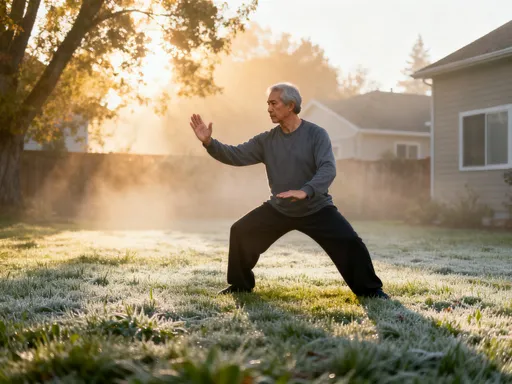
The routine I follow every morning consists of four foundational movements. Each one is simple, easy to learn, and designed to prepare the body and mind for the day ahead. I perform them in the same order, at the same time — usually just after waking, before breakfast. This consistency helps create a sense of rhythm and safety in my nervous system. Here’s how each movement works and how to practice it safely.
The first movement is called **Lifting the Sky**. Stand with your feet shoulder-width apart, knees slightly bent. Inhale slowly as you raise your arms in front of you, then overhead, as if lifting a heavy ball of light. Keep your movements smooth and relaxed. As your hands reach their highest point, imagine drawing energy up from the earth through your feet and into your body. Exhale as you lower your arms back down to your sides. Repeat for 6 to 9 cycles. This movement gently stretches the spine, improves posture, and encourages deep breathing. It also activates the energy channels along the arms and torso, helping to wake up the body’s circulation.
The second movement is **Bear Swings**. From the same standing position, let your arms hang loosely. Gently bend and straighten your knees in a smooth, rocking motion. As you bend, allow your torso to tilt forward slightly and your arms to swing naturally toward your feet. As you straighten, let your torso rise and your arms swing back behind you. Keep your neck relaxed and your breath steady. This movement mimics the natural sway of large animals and helps release tension in the lower back and hips. It also promotes fluid movement in the spine and encourages the body to move as a connected whole. Because it’s rhythmic and gentle, it’s especially helpful for calming the nervous system.
The third practice is **Turtle Breathing**. Sit or stand comfortably, placing one hand on your belly and the other on your chest. Inhale slowly through your nose, allowing your belly to rise first, then your chest. Exhale fully through your mouth, letting your chest fall, then your belly. Imagine your breath moving like ocean waves — smooth, continuous, and unhurried. Repeat for 1 to 2 minutes. This diaphragmatic breathing technique directly stimulates the vagus nerve, which helps activate the body’s relaxation response. It’s especially effective for reducing anxiety and improving oxygen flow to the brain.
The fourth and final movement is **Shaking Off Fatigue**. Stand with feet apart, knees soft. Let your arms and shoulders go completely loose. Begin to gently shake your whole body — starting from the feet and moving upward. Don’t force the movement; let it be light and bouncy, like a tree in the wind. Shake for 30 to 60 seconds, then stop suddenly and stand still, noticing how your body feels. This practice helps release physical tension, improves circulation, and resets the nervous system. Many people report feeling lighter and more alert afterward. It’s also a great way to transition from stillness back into daily activity.
Each of these movements takes only a few minutes, and the entire routine can be completed in 15 to 20 minutes. The beauty of this system is its adaptability. If you have only five minutes, do one or two movements. If you’re recovering from illness or have limited mobility, perform them seated. The goal is not perfection, but presence. Over time, you’ll begin to feel the subtle shifts — a deeper breath, a quieter mind, a greater sense of ease.
How Qigong Supports Health Maintenance: From Stress to Sleep
The benefits of regular qigong practice are both immediate and long-term. In the short term, many people notice a sense of calm and mental clarity after just one session. Over time, more profound changes occur. Scientific studies have shown that consistent qigong practice can lead to measurable improvements in several key areas of health.
One of the most well-documented effects is stress reduction. Chronic stress elevates cortisol, the body’s primary stress hormone, which can disrupt sleep, weaken immunity, and contribute to weight gain. Qigong helps lower cortisol levels by activating the parasympathetic nervous system — the part of the body responsible for rest, digestion, and recovery. This shift allows the body to move out of constant ‘fight-or-flight’ mode and into a state of balance.
Improved sleep is another common benefit. Many women in midlife struggle with insomnia or restless sleep due to hormonal changes and mental overactivity. Qigong’s emphasis on slow breathing and mindful movement helps quiet the mind and prepare the body for rest. Research has shown that regular practitioners often experience longer sleep duration and fewer nighttime awakenings.
Circulation also improves with consistent practice. The gentle, flowing movements encourage blood and lymph to move more freely through the body, reducing stiffness and supporting joint health. This is especially important as we age and natural mobility begins to decline. Enhanced circulation also means better oxygen delivery to tissues, which supports energy levels and mental focus.
Additionally, qigong has been linked to improved emotional regulation. By fostering greater body awareness and present-moment focus, it helps reduce rumination and anxiety. Practitioners often report feeling more patient, more resilient, and better able to handle daily challenges without becoming overwhelmed. These effects are not dramatic or immediate — they build gradually, like layers of strength forming beneath the surface.
It’s important to note that qigong is not a medical treatment. It does not replace professional care for diagnosed conditions. But as a daily practice for health maintenance, it offers a powerful way to support the body’s natural ability to stay in balance. It’s not about fixing what’s broken, but about nurturing what’s already working.
Common Barriers and How to Overcome Them
Despite its simplicity, many people struggle to maintain a qigong practice. The most common barrier is lack of time. Between work, family, and household responsibilities, finding even ten minutes can feel impossible. But the solution is not to wait for more time — it’s to start small. Begin with just three to five minutes a day. Even one movement, done consistently, can make a difference. Over time, as you begin to feel the benefits, you’ll naturally want to extend the practice.
Another obstacle is skepticism. Some people dismiss qigong as too gentle or ‘woo-woo’ to be effective. If this is your experience, approach it as an experiment. Try it for two weeks with no expectations. Focus not on whether it feels ‘spiritual’ or ‘energetic,’ but on tangible changes — do you breathe more deeply? Feel calmer? Sleep better? Let your own experience be the guide.
Impatience is also common. Many expect immediate results and become discouraged when changes are subtle. But qigong works cumulatively, like saving money in a bank. Small, regular deposits add up over time. Trust the process, and be kind to yourself on days when motivation is low. Missing a day is not failure — it’s part of being human.
Physical discomfort can also be a challenge, especially for those with joint pain or limited mobility. The good news is that qigong is highly adaptable. All movements can be modified — done seated, with smaller range of motion, or at a slower pace. The goal is not to achieve a perfect form, but to maintain connection with your body and breath. If something hurts, stop or adjust. This is self-care, not self-punishment.
Finally, many women feel guilty about taking time for themselves. They believe they should be doing something ‘productive’ instead. But tending to your well-being is not selfish — it’s essential. When you are grounded and calm, you show up better for your family, your work, and your life. Qigong is not a luxury; it’s a form of stewardship for the most important resource you have: yourself.
Building a Lifelong Habit: Integrating Qigong Into Everyday Life
The true power of qigong lies not in the morning routine alone, but in how its principles extend into daily life. Once you’ve practiced regularly, you begin to carry its qualities with you — a slower pace, greater awareness, a deeper connection to your breath. These qualities can transform ordinary moments into opportunities for presence.
For example, when washing dishes, you might notice the warmth of the water and the rhythm of your hands. While walking, you might tune into the movement of your feet and the air on your skin. During a stressful conversation, you might remember to take one slow breath before responding. These small acts of awareness are extensions of your qigong practice — moments where you choose presence over autopilot.
To make the habit stick, it helps to anchor your practice to an existing routine. Many women find success by pairing qigong with morning tea, after brushing their teeth, or before checking their phone. This ‘habit stacking’ makes it easier to remember and reduces decision fatigue. Over time, the sequence becomes automatic — not because it’s easy every day, but because it’s meaningful.
Ultimately, qigong is not about achieving a perfect body or a stress-free life. It’s about showing up for yourself, day after day, with kindness and consistency. It’s about recognizing that health is not a destination, but a daily practice — one that doesn’t require perfection, only presence. In a world that constantly pulls us in different directions, qigong offers a quiet way to return to center. And for anyone who has ever felt overwhelmed, exhausted, or disconnected, that return can be nothing short of transformative.